Beech House History
|
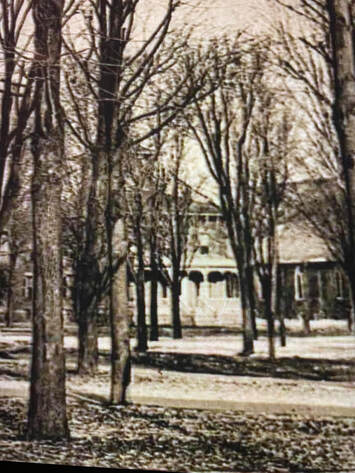
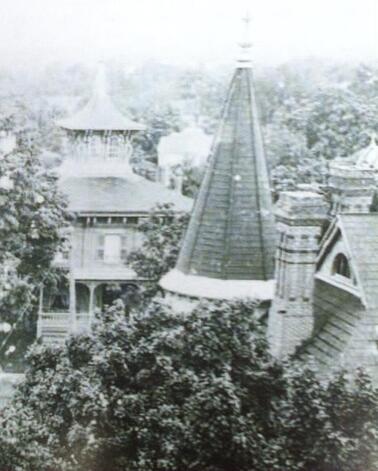
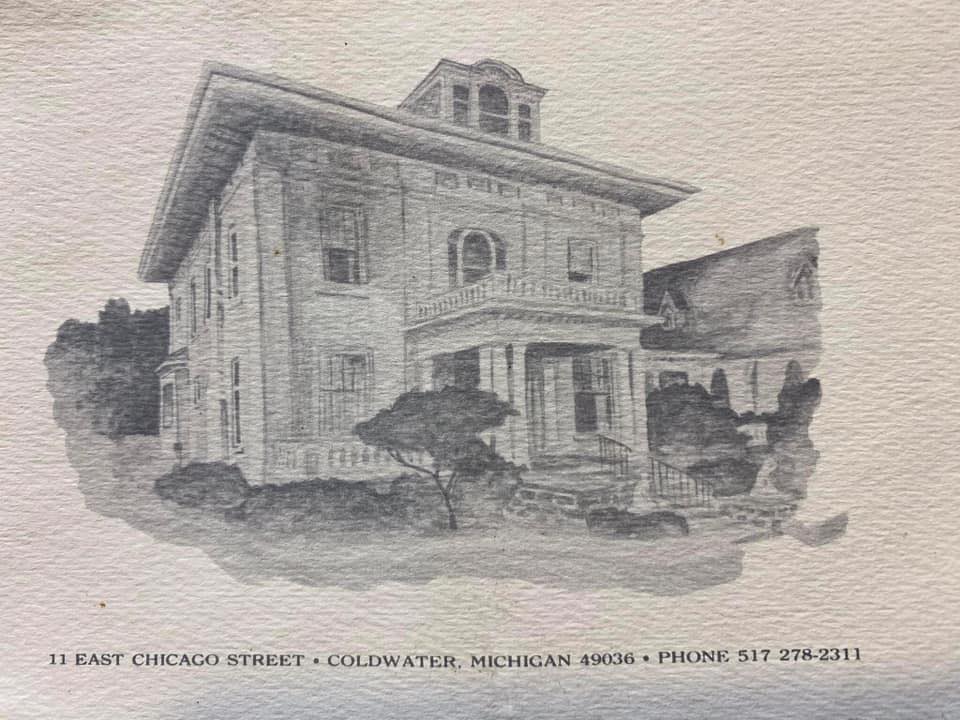
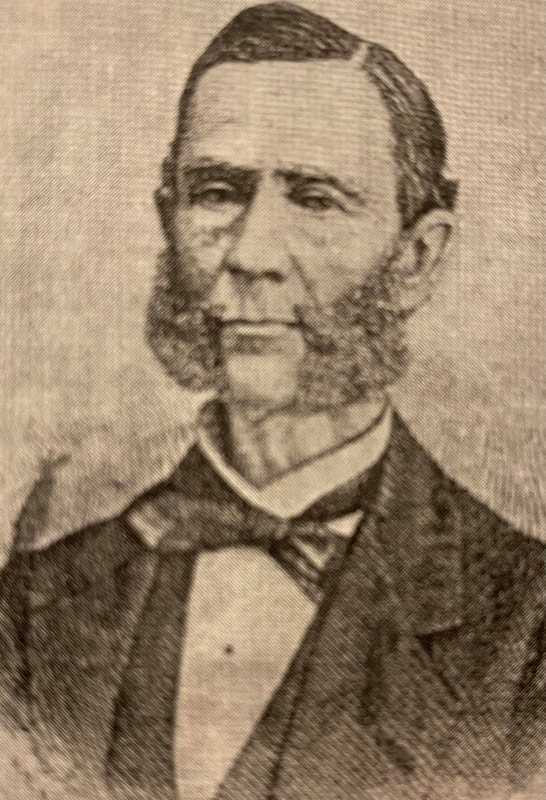
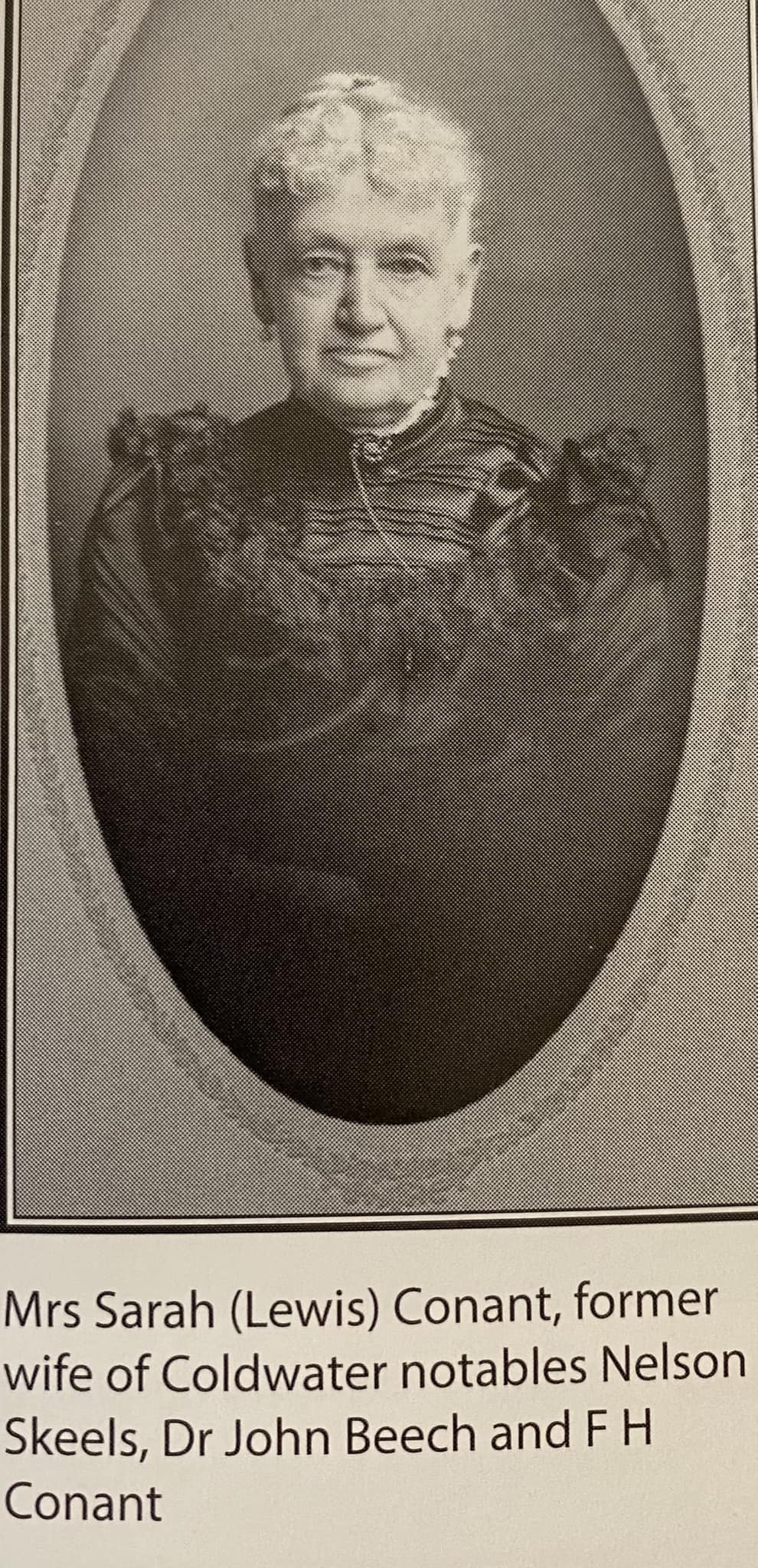
Dr. John Beech, a Civil War surgeon born in 1819 in Gaines, New York, arrived in Coldwater in 1850 and built the Italianate-style home in 1859 with his first wife, Eliza Crownse. She died later that year, and Dr. Beech subsequently married Mary Jane Petty in 1861, who passed away in 1872, after which he married Sarah Skeels.
In 1869, Dr. Beech offered the east parlors of his home to the newly formed Ladies’ Library Association. The group began with twenty-one charter members and soon accumulated about 1,200 volumes. In 1874, he provided the organization with a small building on the north side of the property, allowing the collection to expand to more than 2,000 volumes by 1880. That same year, following legislative action that consolidated school libraries with the city library, the Association transferred its holdings and property to the city, formally ending its operations. Horace and Grace Kitchel purchased the home in 1907, adding stucco to the exterior, raising the roofline, removing the cupola, and constructing a third-floor ballroom. The Kitchel family owned a publishing company that founded the Coldwater Daily Reporter in 1895. Their daughter Ruth, a University of Michigan journalism graduate and pilot, wrote weekly aviation columns now preserved at the Branch District Library and community center. Kitchel liniment and hair tonic were also produced at 340 W. Chicago Street, likely operated by S. B. Kitchel. |
In 1936, Frank and Lulu McConkey moved their funeral home into the former Kitchel residence. The two‑story addition at the rear of the home was likely constructed by the McConkeys to accommodate an embalming room and elevator. The McConkeys are buried at Oakgrove Cemetary.
Kenneth and Eleanor Putnam purchased the home in 1946, raising three children there while operating their funeral business. Kenneth Putnam often referred to the building as his “fourth child,” reflecting his deep appreciation for the property. The Putnams owned the home for 52 years before selling it to a national funeral home company in 1998.
The new owners appointed a local manager, Mike Axford, who lived with his wife Anne in the downstairs apartment created by Charlie Putnam for many years.
After the funeral home eventually closed, the building sat vacant, falling into disrepair with burst boiler pipes, roof leaks, mold, and animal intrusion. The City of Coldwater purchased the home and stabilized it by installing a new roof and repainting the exterior. In 2022, a group of local residents proposed restoring the building as a community center. The city approved a one-year planning grant and funded a first-floor HVAC system.
The group formed Coldwater Community Center, Inc., a nonprofit organization, and began extensive cleaning, painting, and refinishing of the inlaid wood floors. Volunteers from the former Habitat for Humanity constructed two ADA-compliant bathrooms, and contributions from local businesses helped bring the first floor into compliance with city codes. After the initial year, the city granted a three-year lease, and renovations continue with the goal of making all three floors publicly accessible.
Kenneth and Eleanor Putnam purchased the home in 1946, raising three children there while operating their funeral business. Kenneth Putnam often referred to the building as his “fourth child,” reflecting his deep appreciation for the property. The Putnams owned the home for 52 years before selling it to a national funeral home company in 1998.
The new owners appointed a local manager, Mike Axford, who lived with his wife Anne in the downstairs apartment created by Charlie Putnam for many years.
After the funeral home eventually closed, the building sat vacant, falling into disrepair with burst boiler pipes, roof leaks, mold, and animal intrusion. The City of Coldwater purchased the home and stabilized it by installing a new roof and repainting the exterior. In 2022, a group of local residents proposed restoring the building as a community center. The city approved a one-year planning grant and funded a first-floor HVAC system.
The group formed Coldwater Community Center, Inc., a nonprofit organization, and began extensive cleaning, painting, and refinishing of the inlaid wood floors. Volunteers from the former Habitat for Humanity constructed two ADA-compliant bathrooms, and contributions from local businesses helped bring the first floor into compliance with city codes. After the initial year, the city granted a three-year lease, and renovations continue with the goal of making all three floors publicly accessible.
Update March 2026
Sources:
Randall Hazelbaker
Mark Putnam
David McDonald’s book, Branch County, Then and Now, 1800-2016, An Informal History, Published by the Branch County History Book Project and the Branch County Historical Society, 2016, pp. 47-48.
Branch County Historical Society, Architectural Historical Home Tour Walk
Mike and Anne Axford
Sources:
Randall Hazelbaker
Mark Putnam
David McDonald’s book, Branch County, Then and Now, 1800-2016, An Informal History, Published by the Branch County History Book Project and the Branch County Historical Society, 2016, pp. 47-48.
Branch County Historical Society, Architectural Historical Home Tour Walk
Mike and Anne Axford
Coldwater Community Center
11 E. Chicago St.
Coldwater, MI 49036
11 E. Chicago St.
Coldwater, MI 49036
Follow Us On Facebook for more updates!